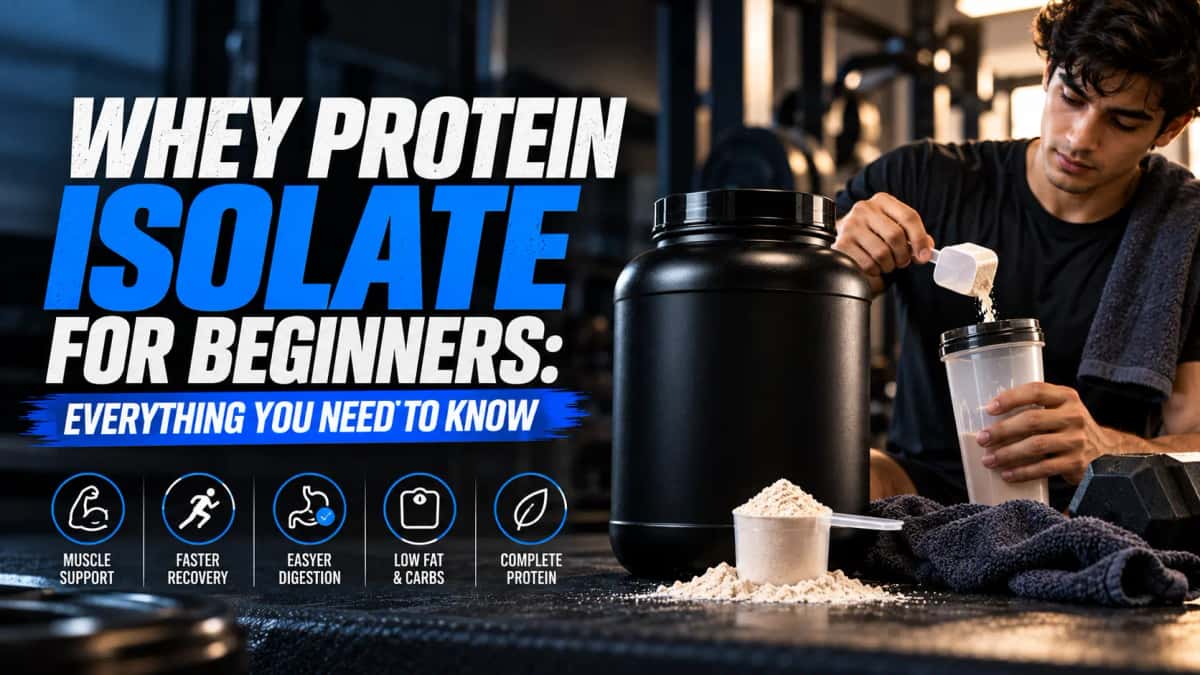
If you are new to protein supplements, whey protein isolate can sound more complicated than it really is.
You may be wondering:
- What exactly is whey isolate?
- Is it better than regular whey protein?
- Do beginners actually need it?
- How much should you take?
- Should you drink it before or after a workout?
- Is it suitable if regular milk or whey concentrate makes you feel uncomfortable?
The simplest way to understand it is this:
Whey protein isolate is a highly filtered form of whey protein that generally contains a higher percentage of protein and lower amounts of fat, carbohydrates and lactose than whey concentrate.
It can be a useful option for beginners who want a convenient way to increase daily protein intake, particularly when they prefer a leaner protein source or tolerate lower-lactose whey products better.
However, isolate is not automatically the best protein for everyone.
Your total daily protein intake, diet, training, digestion, budget and consistency matter more than simply choosing the word “isolate” on a label.
This beginner's guide explains what whey protein isolate is, how to use it, who it may suit and how to choose the right product.
What Is Whey Protein Isolate?
Whey is one of the main proteins found in milk.
During dairy processing, whey can be separated and processed into protein powder. Depending on the level and type of processing, it can become whey protein concentrate, whey protein isolate or hydrolysed whey.
Whey protein isolate, often shortened to WPI, undergoes additional filtration that removes more of the lactose, fat and carbohydrates found in whey concentrate.
As a result, whey isolate generally has a higher percentage of protein by weight.
Healthline notes that whey isolate typically contains around 90% protein or more, while also containing less lactose and fat than whey concentrate.
That does not mean every whey isolate product has exactly the same nutritional profile.
Always check the nutrition panel and ingredient list of the specific product you are considering.
If you want to explore different types of whey products, browse the Whey Protein collection.
How Is Whey Protein Isolate Made?
Whey protein isolate begins with whey derived from milk.
The basic process generally involves:
- separating whey from other milk components;
- filtering the whey to concentrate the protein;
- removing more fat, lactose and carbohydrates;
- drying the filtered liquid into protein powder.
The extra filtration is what distinguishes isolate from less processed forms such as whey concentrate.
This is why isolate usually provides:
- a higher proportion of protein;
- less lactose;
- less fat;
- fewer carbohydrates.
The exact process varies between manufacturers, so two isolate products can still differ in taste, ingredients and nutritional composition.
Whey Protein Isolate vs Regular Whey Protein
Beginners often assume whey isolate is simply a “better” version of regular whey.
That is not quite correct.
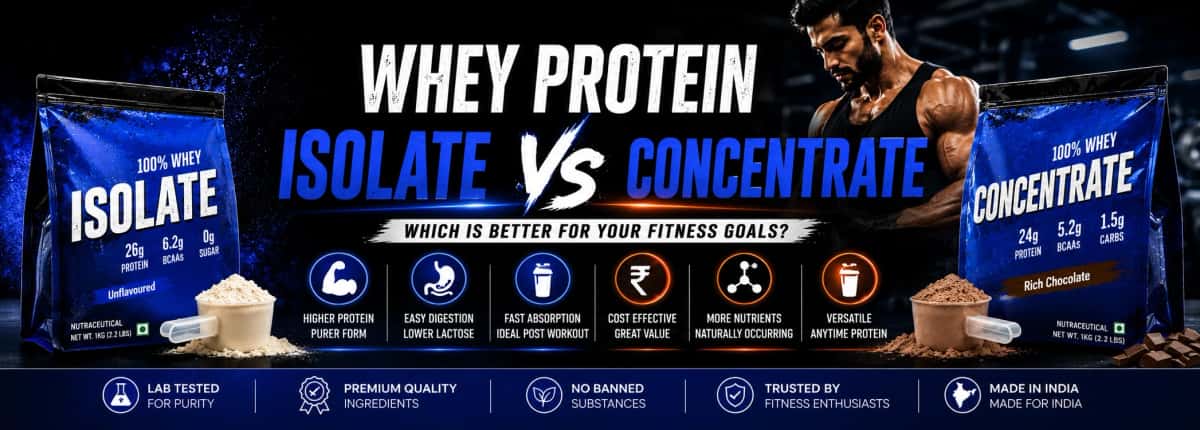
Both whey isolate and whey concentrate are high-quality proteins.
The biggest differences are usually in processing, protein concentration, lactose, fat, carbohydrates and price.
Feature | Whey Protein Isolate | Whey Protein Concentrate |
|---|---|---|
Processing | More extensively filtered | Less extensively filtered |
Protein concentration | Generally higher | Generally lower |
Lactose | Usually lower | Usually higher |
Fat | Usually lower | Usually higher |
Carbohydrates | Usually lower | Usually higher |
Cost | Usually higher | Usually lower |
Suitable for beginners? | Yes | Yes |
Research does not clearly show that isolate produces dramatically better muscle-building results than concentrate when total protein intake is comparable.
So the better question is not:
“Which one is superior?”
It is:
“Which one better matches my diet, digestion, goals and budget?”
For a deeper comparison, read Whey Protein Isolate vs Concentrate.
Is Whey Protein Isolate Good for Beginners?
Yes, whey protein isolate can be suitable for beginners.
But beginners do not automatically need isolate.
It may make sense if you:
- want a high-protein supplement with relatively low carbohydrates and fat;
- are carefully tracking calories or macronutrients;
- find some whey concentrates harder to digest;
- prefer a lower-lactose whey option;
- simply prefer the nutritional profile of isolate.
On the other hand, a whey concentrate or whey blend may also be perfectly suitable if you tolerate it well and it helps you meet your daily protein needs.
Even current sports-nutrition guidance from Optimum Nutrition notes that concentrate can be a practical option for many beginners, while isolate may be more useful when lower lactose, fat or carbohydrates are priorities.
The most important factor is consistency.
A protein powder you tolerate, enjoy and can afford to use regularly is generally more useful than a more expensive product you rarely take.
Main Benefits of Whey Protein Isolate
1. Helps You Meet Your Daily Protein Needs
One of the biggest practical benefits of whey isolate is convenience.
You can get a meaningful amount of protein without preparing a full meal.
This can be useful when:
- your meals are naturally low in protein;
- you have limited time after training;
- you struggle to reach your protein target through food alone.
Protein powder should ideally supplement your diet rather than replace balanced meals.
Whole foods also provide vitamins, minerals, fibre and other nutrients that a protein shake alone may not provide.
If you are unsure how much protein you may need, use Gibbon Nutrition's Protein Calculator as a starting point.
2. Supports Muscle Recovery and Growth
Dietary protein supplies amino acids that the body uses for muscle repair and maintenance.
When adequate protein intake is combined with resistance training, protein supplementation can support gains in muscle mass and strength. Current evidence continues to support protein intake as an important part of resistance-training nutrition.
However, whey isolate itself does not build muscle automatically.
You still need:
- appropriate resistance training;
- enough overall calories and nutrients;
- adequate recovery;
- consistent protein intake.
If muscle building is your primary goal, you can also explore Gibbon Nutrition's Build Muscle collection.
3. Provides Complete Protein
Whey contains all nine essential amino acids.
That makes it a complete protein.
Essential amino acids cannot be produced in sufficient quantities by the body and therefore need to come from your diet.
Whey is also naturally rich in branched-chain amino acids, including leucine, which plays an important role in muscle protein synthesis.
4. Usually Contains Less Lactose Than Whey Concentrate
Because whey isolate undergoes additional filtration, much of the lactose found in whey is removed.
That can make isolate easier to tolerate for some people who experience digestive discomfort from higher-lactose dairy products.
But this point needs an important distinction:
Lower lactose does not mean lactose-free.
The exact amount depends on the product.
And lactose intolerance is completely different from a milk protein allergy.
Anyone with a milk allergy should not assume whey isolate is suitable simply because it contains less lactose.
5. Usually Contains Less Fat and Carbohydrates
Additional filtration generally leaves whey isolate with relatively small amounts of fat and carbohydrates.
That makes it useful for people who want to increase protein intake while keeping the rest of the serving relatively lean.
However, the nutritional difference between isolate and concentrate may be small in the context of your entire day's diet.
Who Should Consider Whey Protein Isolate?
Whey isolate may be particularly useful for:
Beginners Who Struggle to Eat Enough Protein
If your meals consistently leave you short of your protein target, whey isolate offers a convenient way to fill the gap.
People Tracking Calories or Macronutrients
Because isolate generally contains less fat and carbohydrates, it may fit more easily into tightly controlled diets.
People Who Prefer Lower-Lactose Whey
Some people who feel uncomfortable after whey concentrate find isolate easier to tolerate because it usually contains less lactose.
Individual tolerance still varies.
People Who Want a Convenient Post-Workout Protein Source
A shake can be easier than preparing a complete meal immediately after training.
That makes whey isolate useful when convenience is the main consideration.
Who May Not Need Whey Protein Isolate?
You may not need whey isolate if:
- you already meet your protein needs comfortably through food;
- whey concentrate agrees with your digestion;
- you are not concerned about small amounts of additional fat or carbohydrates;
- budget is a major consideration.
This is important for beginners because whey isolate is often marketed as if everyone needs the most filtered or expensive version.
They do not.
For many people, concentrate can provide the same overall protein benefits at a lower price when total protein intake is matched.
How Much Whey Protein Isolate Should a Beginner Take?
There is no universal number of scoops every beginner should take.
The correct approach is:
Work out your total daily protein requirement first, then use whey protein only to fill the gap that remains after food.
For example:
If your diet already provides enough protein from foods such as:
- eggs;
- dairy;
- fish;
- chicken;
- soy;
- dals and pulses;
- other protein-rich foods,
you may not need much protein powder at all.
If your diet consistently falls short, one serving may help.
Do not choose your intake based purely on what another gym member takes.
Needs vary according to:
- body weight;
- age;
- activity;
- training volume;
- goals;
- total calorie intake;
- overall diet.
Use the Protein Calculator to estimate your needs, and follow the serving directions on the product you purchase.
When Should Beginners Take Whey Protein Isolate?
There is no single mandatory time.
You can take whey isolate:
- after training;
- with breakfast;
- between meals;
- as part of a smoothie;
- whenever it helps you meet your daily protein target.
For beginners, daily protein intake and consistency matter more than obsessing over exact timing.
You do not need to panic if you fail to drink your shake immediately after your final repetition.
The old idea that you have only a tiny “anabolic window” after training is too simplistic.
If you train regularly and distribute enough protein across the day, exact minute-by-minute timing becomes less important.
How to Take Whey Protein Isolate
The easiest method is:
- add the serving recommended on the product label to a shaker;
- add water or milk;
- shake thoroughly;
- consume according to your diet and training routine.
You can also add whey isolate to:
- smoothies;
- oats;
- yoghurt;
- shakes with fruit;
- other foods where protein powder fits naturally.
Always follow the specific product directions rather than assuming every scoop size is identical.
Whey Protein Isolate With Water vs Milk
Both work.
The better option depends on what you want from the shake.
Whey Isolate With Water
Using water usually gives you:
- fewer additional calories;
- no extra fat or carbohydrates from milk;
- a lighter shake.
It may suit people who want a simple, lean protein drink.
Whey Isolate With Milk
Milk can provide:
- additional protein;
- carbohydrates;
- calories;
- a creamier taste and texture.
That can be useful if you are trying to increase overall calorie or protein intake.
Neither option is universally better.
Choose based on your calorie needs, digestion and taste preference.
Can Beginners Take Whey Protein Isolate Every Day?
For most healthy adults who tolerate dairy protein, whey protein can be used regularly as part of an appropriate diet.
But the key question is not whether you can take whey every day.
It is whether you need it every day.
If your diet already provides enough protein on a particular day, another protein shake may not add meaningful value.
Think of whey isolate as a convenient food-derived protein supplement, not as a mandatory daily fitness ritual.
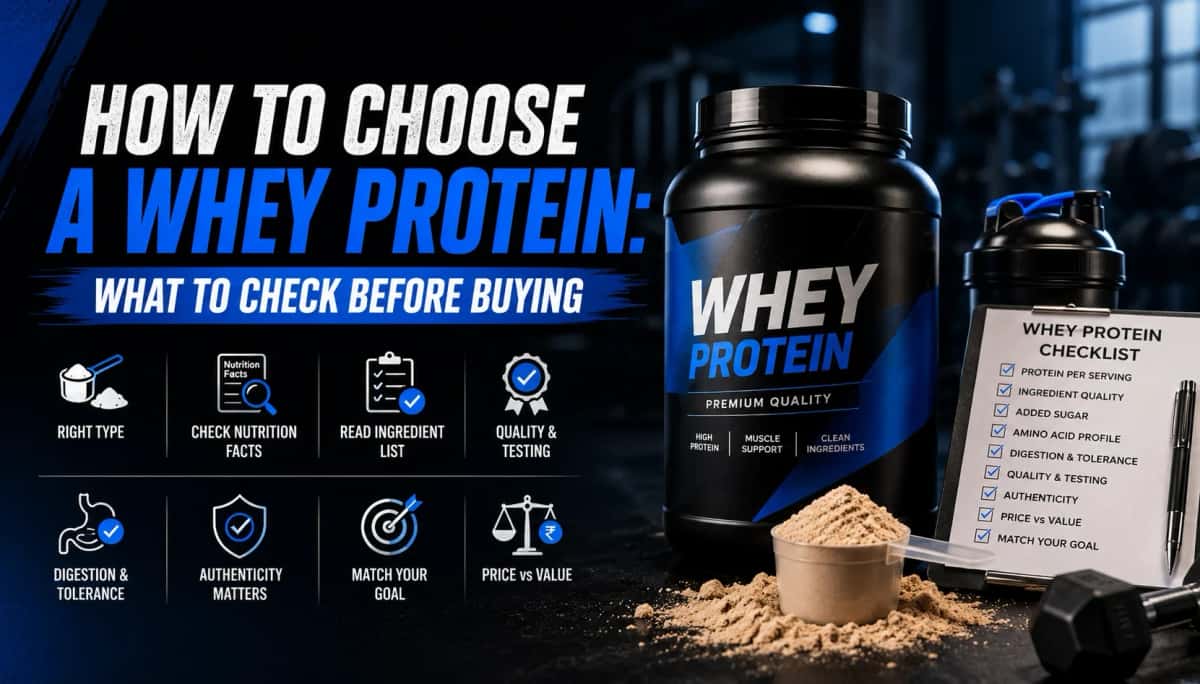
How to Choose a Whey Protein Isolate
Beginners should look beyond the front of the tub.
Check the following.
Protein Per Serving
Compare the actual amount of protein with the serving size.
Do not assume every product labelled “isolate” provides exactly the same amount.
Ingredient List
Look at what else is included.
Depending on the formula, products may contain:
- flavours;
- sweeteners;
- emulsifiers;
- digestive ingredients;
- other protein sources.
Nutrition Panel
Check:
- protein;
- calories;
- carbohydrates;
- sugars;
- fat;
- sodium.
Choose based on your own nutritional needs rather than marketing claims alone.
Testing and Authenticity
For supplements, transparency matters.
Look for clear information about:
- manufacturing;
- batch identification;
- product verification;
- testing where provided;
- legitimate seller information.
Gibbon Nutrition also provides a product verification page for authenticity checks.
Price Per Serving
Do not compare only the price of the tub.
Compare:
price ÷ number of servings
and also consider how much actual protein each serving provides.
Your Digestive Tolerance
A product can look excellent on paper and still be a poor choice if you consistently experience discomfort when using it.
Your own tolerance matters.
For a broader buying checklist, read How to Choose Whey Protein.
Whey Protein Isolate Options at Gibbon Nutrition
If whey isolate fits your goals and diet, Gibbon Nutrition currently has isolate-focused products within its whey range.
Muscle Isolate 2kg
Muscle Isolate 2kg is one of the isolate options available in Gibbon Nutrition's current product range.
It can be considered by users specifically looking for an isolate-focused whey product rather than a standard whey option.
Ripped Isolate 2kg
Ripped Isolate 2kg is another isolate option currently listed by Gibbon Nutrition.
Before choosing between products, compare the current ingredient panel, nutrition information, serving size, price and product directions.
Do Beginners Have to Choose Isolate?
No.
Gibbon Nutrition also offers regular whey options including Muscle Whey 2kg and My Whey 2kg.
A beginner should choose based on actual needs rather than assuming isolate is automatically necessary.
You can see the complete range in the Whey Protein collection.
Common Whey Protein Isolate Mistakes Beginners Make
1. Thinking More Protein Automatically Means More Muscle
Once your protein needs are met, simply adding more shakes will not automatically create more muscle.
Training and total nutrition still matter.
2. Replacing Proper Meals With Protein Shakes
Whey protein is convenient, but it does not provide everything found in a balanced meal.
Use it to complement good nutrition.
3. Assuming Isolate Is Always Better Than Concentrate
Isolate has a different nutritional profile.
That does not automatically make it better for every person.
4. Ignoring the Ingredient List
Do not judge a protein powder only by the large protein number on the front.
Read the entire nutrition panel and ingredient list.
5. Obsessing Over Post-Workout Timing
You do not need to sprint from the final set to your shaker.
Consistent daily protein intake is more important than consuming protein within a few exact minutes.
6. Buying Based Only on Price
A cheaper tub is not necessarily better value.
Compare:
- total servings;
- protein per serving;
- ingredient quality;
- authenticity;
- testing information.
7. Expecting Protein Powder to Replace Training
Protein supports recovery and muscle development when the rest of the programme is in place.
It cannot compensate for inconsistent training.
Frequently Asked Questions About Whey Protein Isolate
Is whey protein isolate safe for beginners?
For most healthy adults who tolerate milk proteins, whey isolate can be used as part of a balanced diet. Follow the product directions and consider professional dietary guidance if you have a medical condition or specific dietary requirements.
Is whey isolate better than whey concentrate for beginners?
Not necessarily.
Isolate generally contains more protein by weight and less lactose, fat and carbohydrates, while concentrate is often cheaper. Both can help increase daily protein intake.
Can I take whey protein isolate without working out?
Yes. Protein is a nutrient your body needs regardless of whether you train.
However, consuming whey protein alone will not produce the muscle-building adaptations associated with resistance training.
Can whey isolate help build muscle?
It can contribute to adequate protein intake, which supports muscle repair and growth when combined with resistance training and sufficient overall nutrition.
Is whey isolate lactose-free?
Not automatically.
It generally contains considerably less lactose than whey concentrate, but the exact amount varies by product. Check the label if lactose intake is important to you.
Can I use whey isolate for weight loss?
Whey isolate can provide protein while generally being relatively low in fat and carbohydrates, but it does not independently cause fat loss.
Fat loss ultimately depends on overall energy balance, diet and activity.
Should beginners take whey isolate before or after exercise?
Either can work.
There is no requirement to take it at one exact time. Use it when it conveniently helps you meet your daily protein intake.
How many scoops should a beginner take?
Do not choose a fixed number of scoops without considering your total diet.
First estimate your daily protein needs, calculate how much protein you already get from food, and use protein powder only if required to fill the remaining gap.
Final Takeaway
Whey protein isolate is simply a more filtered form of whey protein, typically providing a higher proportion of protein with lower amounts of lactose, fat and carbohydrates than whey concentrate.
For beginners, it can be a useful option if you:
- need a convenient way to increase protein intake;
- prefer a leaner protein source;
- want lower lactose than many concentrates provide;
- are tracking calories or macronutrients closely.
But whey isolate is not compulsory.
A regular whey concentrate or whey blend may work equally well when it fits your diet, digestion and budget.
Instead of asking:
“What is the most advanced protein powder?”
ask:
“Which protein helps me meet my needs consistently?”
Start with your total daily protein requirements, prioritise a balanced diet and use supplements to fill genuine gaps.
Explore Gibbon Nutrition's complete Whey Protein range to compare available whey and isolate options.