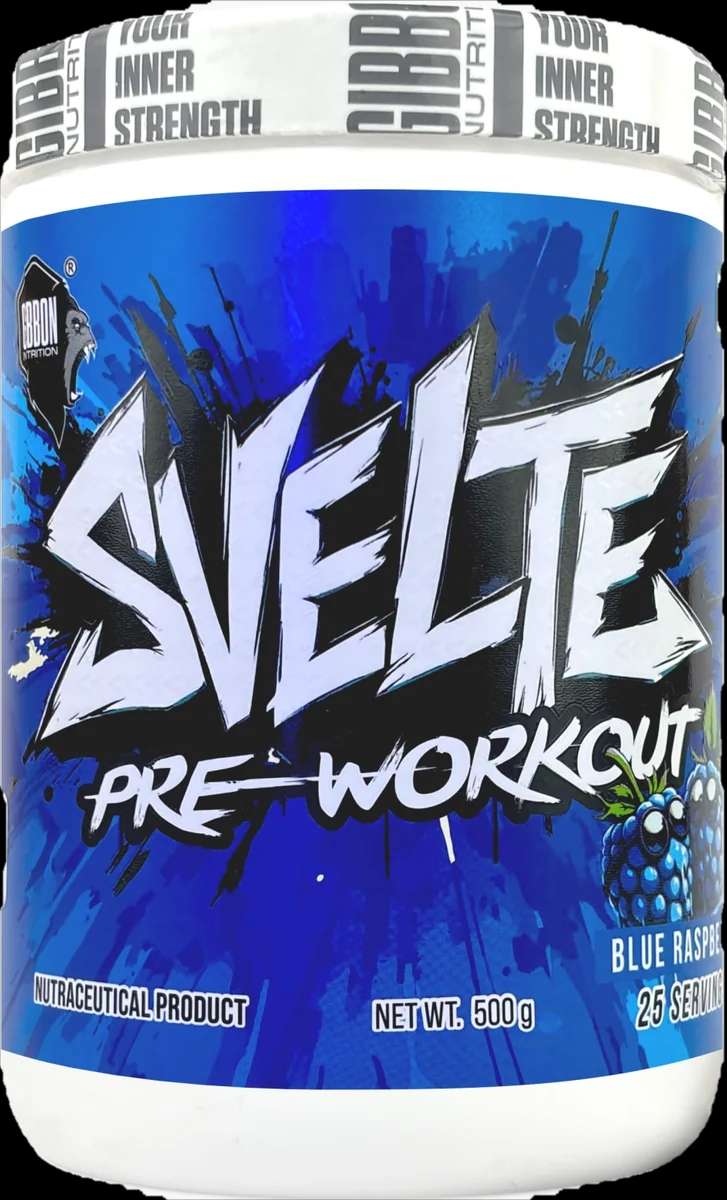
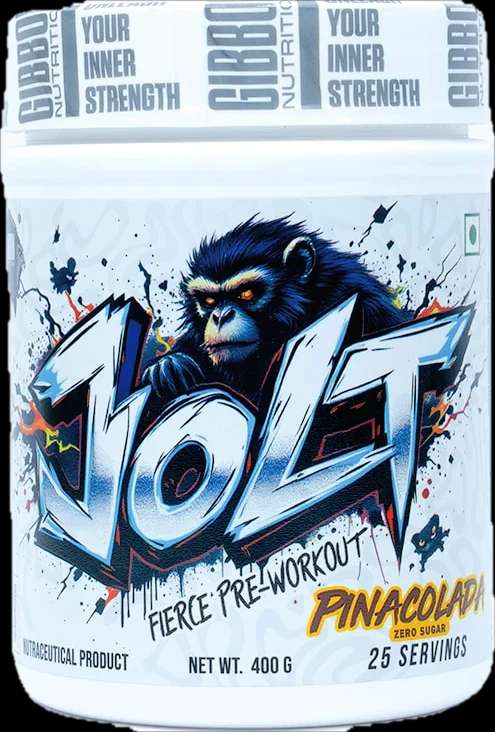
Caffeine 300 mg25 servings4 flavours
₹1,323 with online payment
Learn what age pre-workout may be appropriate, why stimulant supplements are generally not recommended for teens, and what adults should check before use.
By Gibbon Nutrition
Published 26 Nov 2026 · 12 min read
If you are 13, 15, 16 or 17 and wondering whether you can start taking pre-workout, the safest answer is:
Stimulant-based pre-workout supplements are generally not recommended for children and teenagers without medical guidance.
Turning 18 does not suddenly make every pre-workout safe either.
Pre-workout products can contain caffeine and combinations of ingredients such as beta-alanine, citrulline, creatine, amino acids and other stimulants. Their formulas vary widely, and most research on exercise-performance supplements has been conducted in adults rather than children.
For young athletes, major pediatric health organizations recommend focusing first on:
For healthy adults, pre-workout may be considered when the product, ingredients and caffeine amount are appropriate for the individual.
In India, FSSAI guidance also states that foods for sportspersons should be used under medical advice or dietetic supervision.
There is no single age that makes every pre-workout formula automatically safe.
However, a useful practical distinction is:
| Age | Stimulant Pre-Workout? | Better Approach |
|---|---|---|
| 12 and under | Avoid | Food, water, sleep and age-appropriate training |
| 13–15 | Generally avoid | Nutrition and hydration first |
| 16–17 | Generally not recommended without medical guidance | Speak with a pediatrician or sports dietitian |
| 18+ | May be appropriate for some healthy adults | Check ingredients, caffeine and label directions |
| 20+ | Adult guidance applies | Same precautions as any adult |
The American Academy of Pediatrics advises young athletes to focus on fluids, calories, training, conditioning and rest rather than performance supplements. It also notes that caffeine's effects are not as well studied in children.
CHOC Children's similarly notes that long-term studies of sports supplements in children and teenagers are lacking and recommends discussing supplements with a pediatrician first.
So the useful answer to “what age should you take pre-workout?” is not simply “18.”
It is:
Avoid stimulant pre-workouts during childhood and adolescence unless a qualified healthcare professional specifically advises otherwise. Once you are an adult, assess the actual product rather than relying on age alone.
The biggest concern is usually not the words “pre-workout” themselves.
It is what is inside the formula.
Many pre-workouts contain caffeine.
The American Academy of Pediatrics notes that some popular pre-workout products contain roughly 150–350 mg of caffeine per serving. High doses can contribute to:
The NIH also cites guidance that adolescents should limit caffeine intake to no more than about 100 mg per day.
That means one adult-formulated pre-workout serving can potentially contain more caffeine than a teenager should consume across an entire day.
Pre-workout caffeine taken later in the day can interfere with sleep.
That matters because sleep is critical for:
Using stimulants to compensate for poor sleep can create the opposite of the intended effect.
There is no universal pre-workout formula.
One product may contain modest caffeine.
Another may combine:
This makes judging safety by the phrase “pre-workout supplement” alone unreliable.
Young athletes may also be exposed to poorly labelled or contaminated sports supplements.
FSSAI has specifically warned about the possibility of undeclared performance-enhancing or prohibited substances in sports supplements and requires manufacturers to ensure prohibited substances are not present.
Product authenticity and transparent labelling therefore matter at any age.
No stimulant pre-workout should be routinely recommended to a 12-year-old.
At this age, athletic performance should be built through:
There is little reason for a child to rely on an adult-oriented stimulant supplement for training.
If a young athlete has fatigue or nutritional concerns, those should be discussed with a pediatrician or qualified dietitian rather than self-treated with pre-workout.
A 13-year-old should generally avoid stimulant pre-workout supplements.
The issue is not simply body size.
Research on the long-term safety and effectiveness of multi-ingredient pre-workout products in teenagers is limited.
CHOC specifically notes that long-term studies in children and teens have not been adequately performed.
Better pre-training fuel could include an appropriate meal or snack, water and sufficient sleep.
For a healthy 14-year-old, I would not recommend routine stimulant pre-workout use.
Teenagers frequently see pre-workout products promoted by:
That does not establish that those products are appropriate for adolescents.
At 14, improving training technique, nutrition and recovery has far more value than trying to increase workout intensity with stimulants.
A 15-year-old should generally not use stimulant pre-workout without medical guidance.
A common mistake is assuming that because someone is already lifting weights, adult supplements automatically become appropriate.
Training age and biological age are not the same thing.
If a 15-year-old feels they need a stimulant simply to complete normal training, first investigate:
These are more likely to be useful areas to improve.
Routine stimulant pre-workout use is not something I would recommend for a 16-year-old without discussing it with a pediatrician or qualified sports dietitian.
The American Academy of Pediatrics specifically warns about caffeine-containing pre-workout products and advises young athletes to rely on adequate carbohydrates, hydration and sleep instead.
This is also the age where “dry scooping” becomes particularly relevant because of social-media trends.
Dry scooping means swallowing powdered pre-workout directly rather than mixing it with liquid as directed.
Do not do this.
The American Academy of Pediatrics warns that dry scooping can contribute to:
More concentrated does not mean more effective.
At 17, the same principle still applies.
Being close to 18 does not make adult stimulant formulas automatically appropriate.
A 17-year-old competitive athlete considering any performance supplement should ideally discuss it with:
This is particularly important for athletes competing under anti-doping rules.
At 18, someone is an adult, but that does not mean every pre-workout becomes automatically safe.
An adult should still check:
FSSAI rules for foods for sportspersons specify that these products should be used under medical advice by a physician or certified dietitian/nutrition professional.
So “18+” should be viewed as a practical adult threshold—not a guarantee of safety.
A healthy 20-year-old may consider pre-workout if there are no relevant health contraindications and the product is used according to its label.
The same adult precautions apply:
For healthy adults, EFSA considers single caffeine doses up to 200 mg and total intake up to 400 mg per day from all sources generally not to raise safety concerns, although individual sensitivity varies.
That figure is not a target you need to reach.
Less may be entirely sufficient.
There is no yes-or-no answer for every pre-workout.
Safety depends on:
A transparent formula used appropriately by a healthy adult is different from an unknown high-stimulant product used by a teenager.
Before buying one, check the actual ingredient label rather than relying on claims such as:
Marketing language tells you very little about safety.
This needs careful interpretation.
EFSA considers about 3 mg of caffeine per kilogram of body weight per day a level that does not raise safety concerns for children and adolescents based on available evidence.
But this should not be interpreted as:
“Teenagers should take pre-workout as long as the caffeine fits 3 mg/kg.”
That is not what the evidence means.
Pre-workout supplements contain more than caffeine, and pediatric organizations still generally advise young athletes to avoid performance supplements unless medically indicated or professionally supervised.
The caffeine figure is a safety reference, not a recommendation to start using pre-workout.
Most young athletes do not need a pre-workout powder.
A much better pre-training routine is:
Training requires fuel.
Depending on timing and the athlete's needs, an appropriate carbohydrate-containing meal or snack before exercise may provide energy without relying on stimulants.
Arrive at training well hydrated rather than trying to compensate with an energy product.
The American Academy of Pediatrics recommends prioritising adequate sleep for young athletes.
Constant exhaustion may indicate:
A scoop of stimulant powder will not fix those problems.
There is not good evidence showing that taking a pre-workout directly “stunts height.”
But that does not make stimulant pre-workouts appropriate for children.
The more relevant concerns include:
So the argument should not be:
“It doesn't stunt height, therefore it is safe.”
Those are two different questions.
“Caffeine-free” does not automatically mean “safe for teenagers.”
A stimulant-free product can still contain concentrated doses of other performance ingredients.
The correct approach remains:
Read the formula and speak with an appropriate healthcare professional before giving a sports supplement to a minor.
Do not use the absence of caffeine as the only safety test.
Whey protein is different from stimulant pre-workout.
Whey is a food-derived source of dietary protein rather than an acute stimulant formula.
However, that does not mean every child or teenager needs protein powder.
The American Academy of Pediatrics says most young athletes consuming a balanced diet do not need protein supplements.
CHOC notes that protein supplements may sometimes help when dietary intake is inadequate, but recommends food-first nutrition for most children and teenagers.
So for questions such as:
the better answer is:
There is no universal age at which every child suddenly needs protein powder. Whether supplementation is appropriate depends on diet, growth, activity and individual nutritional needs. For minors, discuss supplementation with a pediatrician or dietitian first.
If protein needs are the concern, Gibbon Nutrition's Protein Calculator can be useful for adults, while children's protein requirements should be assessed with age-appropriate professional guidance.
Do not treat them as interchangeable.
| Whey Protein | Pre-Workout |
|---|---|
| Provides dietary protein | Usually targets workout energy, focus or performance |
| Food-derived | Multi-ingredient supplement |
| Usually not stimulant-based | Often contains caffeine |
| May help fill a genuine protein gap | Generally unnecessary for most young athletes |
| Food should still come first | Food, hydration and sleep should come first |
A teenager who needs more dietary protein does not therefore need a pre-workout.
Once you are an adult and considering a pre-workout, use a simple checklist.
Look at the actual number of milligrams.
Do not assume one scoop from every product contains the same amount.
Include:
Caffeine can affect sleep even hours later.
For a detailed explanation, read When Should You Take Pre-Workout?.
You can also read How Long Does Pre-Workout Last? if you want to understand how long stimulant effects can persist.
Speak with a healthcare professional before using stimulant supplements if you have relevant:
Look for:
Gibbon Nutrition also provides a product authenticity verification page.
For adult users considering pre-workout supplementation, Gibbon Nutrition's Pre-Workout collection is the relevant category to explore.
Products in the current range include:
₹1,323 with online payment
₹1,669 with online payment
Before using either product, check the current pack label for:
Do not select a pre-workout simply because another person tolerates it well.
Individual caffeine tolerance and health circumstances vary considerably.
More stimulation does not necessarily produce better performance.
This can unintentionally increase total caffeine intake.
Always prepare the product according to its directions.
The workout may feel energetic while sleep quality suffers afterward.
If you are chronically tired, address sleep and recovery instead of increasing stimulant intake.
Natural ingredients can still have physiological effects or interact with medications.
Body size, tolerance, health and other caffeine intake differ.
So, at what age can you take pre-workout safely?
There is no magic birthday that makes every formula safe.
For children and teenagers, especially those under 18, the better approach is to avoid routine stimulant pre-workout use and build performance through:
food + hydration + sleep + training + recovery.
For adults, pre-workout can be considered more appropriately—but only after checking the actual formula, caffeine amount, health status and recommended serving.
And in India, sports supplements deserve an additional layer of caution: FSSAI guidance places products for sportspersons under medical or qualified dietetic/nutrition supervision.
If you are an adult researching pre-workouts, start with Gibbon Nutrition's Pre-Workout collection, then read the product label carefully before deciding whether a particular formula is appropriate for you.
There is no universal age at which pre-workout becomes automatically safe. Children and teenagers should generally avoid stimulant pre-workouts unless specifically advised by an appropriate healthcare professional. Adults can evaluate use based on ingredients, caffeine, medical history and label directions.
There is no simple India-specific age cut-off that makes every product safe. FSSAI places foods for sportspersons under medical or qualified dietetic/nutrition supervision. For minors, professional guidance is particularly important.
Routine stimulant pre-workout is not recommended for a 17-year-old without professional medical or sports-nutrition guidance.
Not as a routine self-selected supplement. Pediatric guidance recommends young athletes focus on nutrition, hydration, sleep and training rather than stimulant performance supplements.
I would not recommend stimulant pre-workout for a 15-year-old without medical guidance.
A 14-year-old should generally avoid stimulant pre-workout and focus on food, hydration, recovery and age-appropriate training.
Routine pre-workout use is not appropriate for a 13-year-old. Discuss any perceived performance or nutritional need with a pediatrician or qualified dietitian.
A 12-year-old should not routinely use stimulant pre-workout. Food, hydration, adequate sleep and appropriate training should be the priority.
An 18-year-old is an adult, but safety still depends on caffeine, other ingredients, health conditions, medications and correct use. Age 18 is not an automatic safety guarantee.
A healthy 20-year-old may consider a pre-workout after reviewing the ingredient label, total caffeine intake and relevant health factors and following appropriate professional and label guidance.
Not necessarily. Removing caffeine does not establish that every other ingredient or dose is appropriate for a teenager.
There is no universal starting age. Children and teens usually should meet protein needs through food first. Protein powder may sometimes be appropriate when nutritional needs are not being met, but for minors this is best decided with a pediatrician or dietitian.
Whey protein and creatine support muscle growth in different ways. This guide compares how they work, benefits, side effects, timing, weight loss, beginners, and whether you should take both.
15 min read · 20 Nov 2026
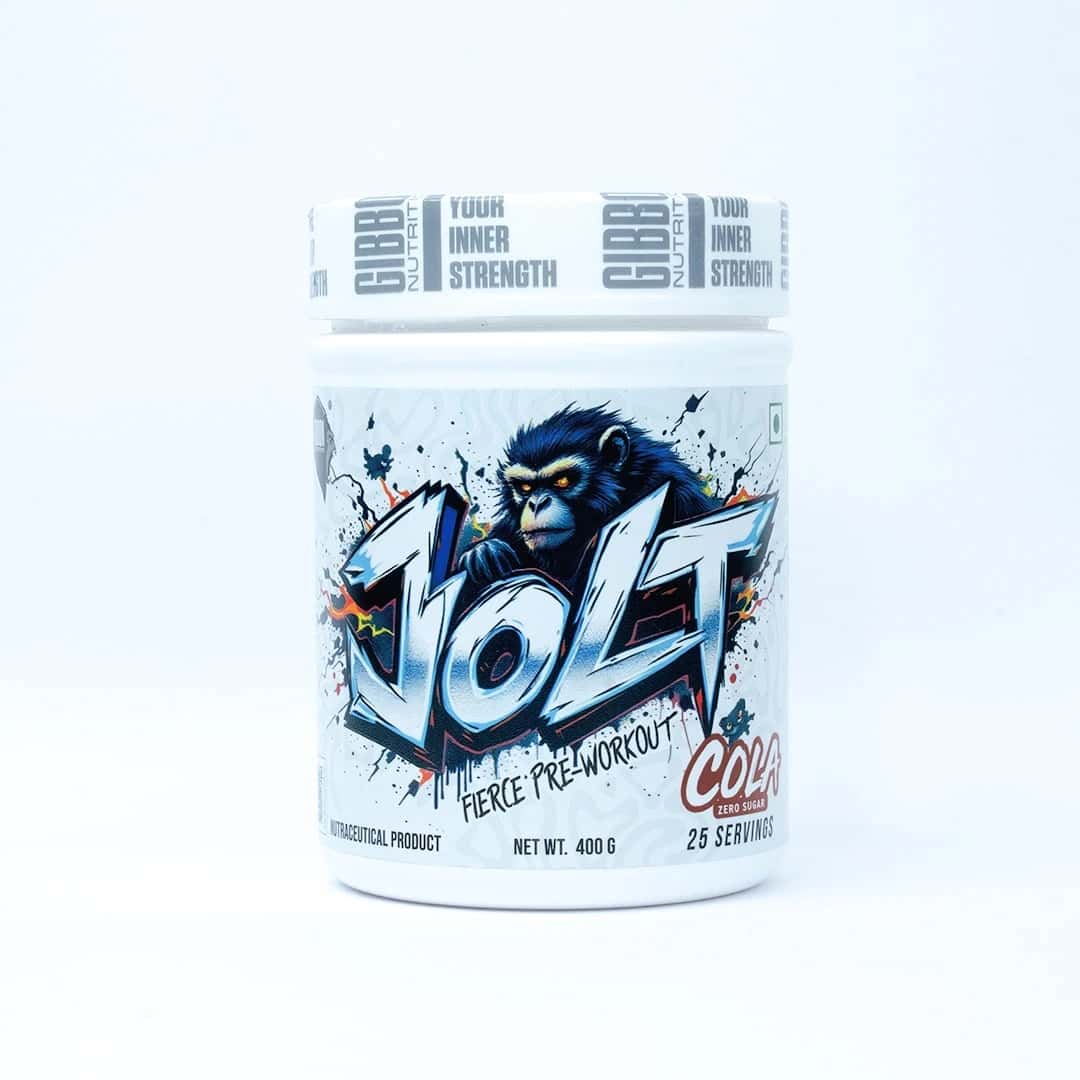
How to read a pre-workout label: caffeine per serving, citrulline, beta alanine, theanine, scoop size and warnings. Three in-stock pre-workouts from Gibbon, MuscleBlaze and Optimum Nutrition compared on each brand's own page, prices checked 31 Oct 2026.
6 min read · 31 Oct 2026
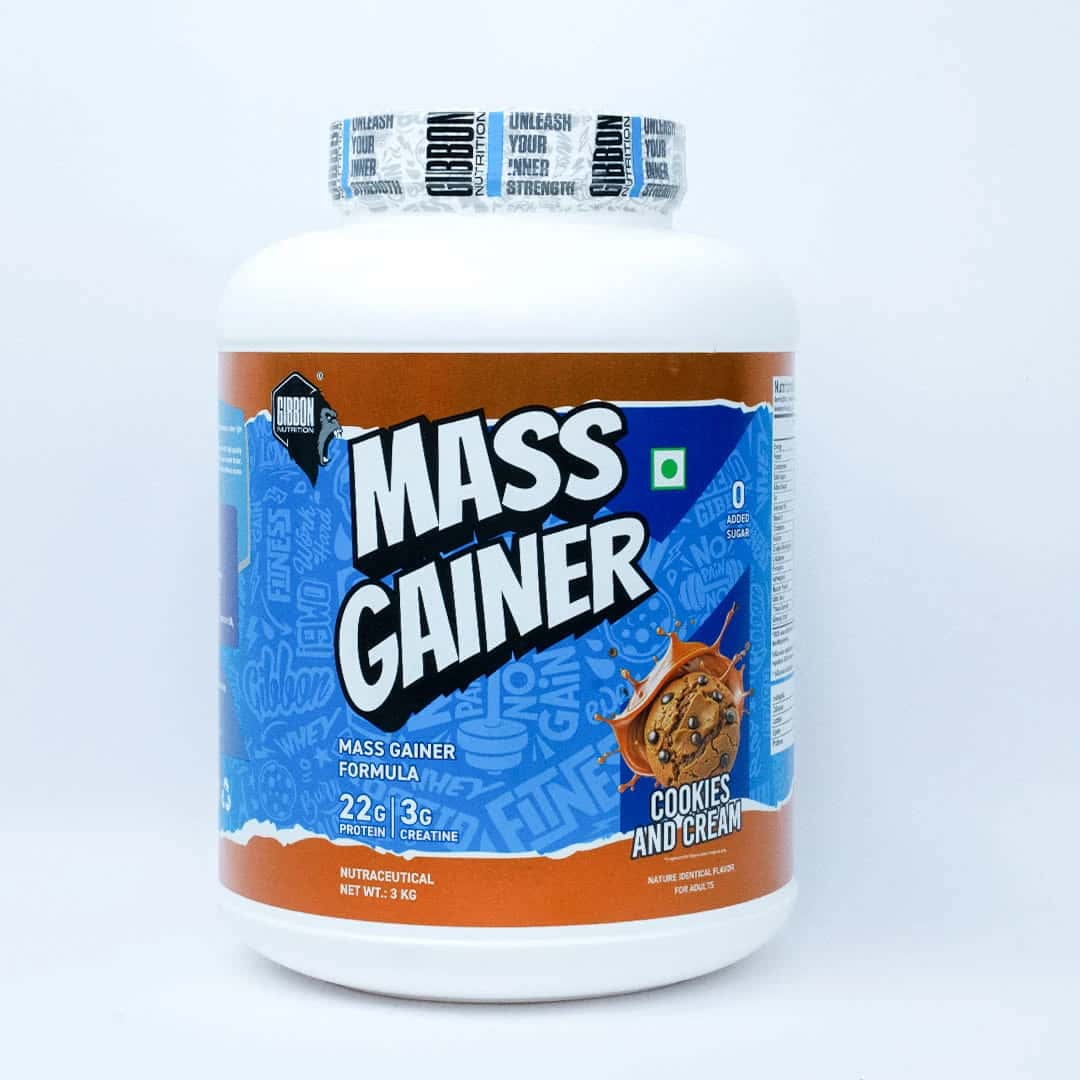
How to choose a mass gainer in India: serving size, calories, protein, carbs and sugar per serving, price per 1,000 kcal and pack size. Four gainers from Gibbon, Avvatar and MuscleBlaze compared on each brand's own page, prices checked 31 Oct 2026.
6 min read · 31 Oct 2026
One email when we publish.