
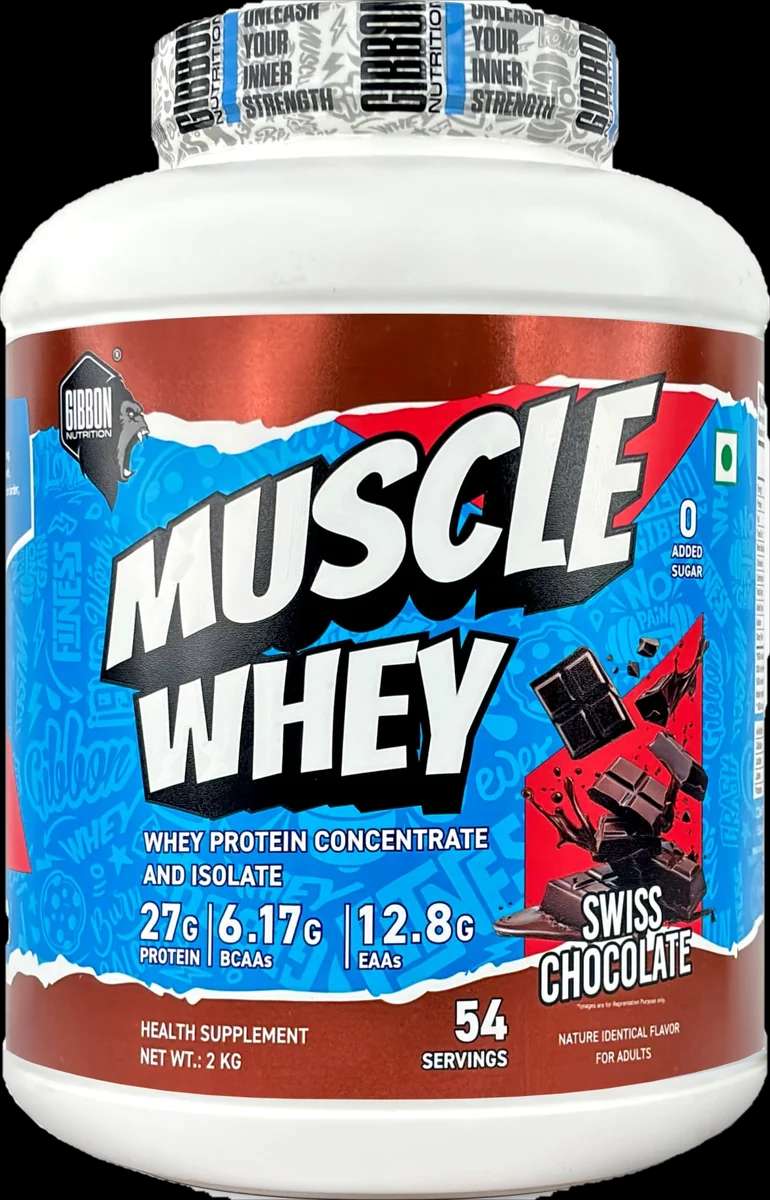
Protein 27 g54 servings3 flavours
Whey Protein vs Creatine: Which Is Better for Muscle Growth?
Whey protein and creatine support muscle growth in different ways. This guide compares how they work, benefits, side effects, timing, weight loss, beginners, and whether you should take both.
By Gibbon Nutrition
Published 20 Nov 2026 · 15 min read
On this page
- Whey Protein vs Creatine: Quick Comparison
- What Is Whey Protein?
- What Is Creatine?
- Whey Protein vs Creatine Difference: How Do They Actually Work?
- Whey Protein: Provides the Raw Material
- Creatine: Supports the Energy System
- Creatine Monohydrate vs Whey Protein: Which Is More Important?
- Whey Protein or Creatine for Beginners?
- If You Are Not Getting Enough Protein
- If Your Protein Intake Is Already Good
- Whey Protein or Creatine: Which Is Better for Muscle Growth?
- Whey Protein and Muscle Growth
- Creatine and Muscle Growth
- So Which Wins?
- Can You Take Whey Protein and Creatine Together?
- When Should You Take Whey and Creatine?
- Whey Protein Timing
- Creatine Timing
- Whey Protein Powder vs Creatine for Strength
- Protein or Creatine: Which Is Better for Muscle Gain?
- Situation 1: Your Protein Intake Is Too Low
- Situation 2: Protein Is Already Adequate
- Situation 3: You Train Seriously and Can Use Both
- Whey Protein or Creatine for Weight Loss?
- Whey During Weight Loss
- Creatine During Weight Loss
- Creatine or Whey Protein for Skinny Guys?
- Whey Protein
- Creatine
- Whey Protein vs Creatine vs Pre-Workout
- Creatine and Whey Protein Side Effects
- Possible Whey Protein Side Effects
- Possible Creatine Side Effects
- Does Creatine Cause Kidney Damage?
- Does Whey Protein Damage the Kidneys?
- Whey Protein vs Creatine: Which Is Better for Your Goal?
- A Practical Whey + Creatine Routine
- Training Day
- Rest Day
- Example
- How to Decide What to Buy First
- 1. Am I Getting Enough Protein?
- 2. Am I Training Consistently?
- 3. What Is My Actual Goal?
- 4. Can I Afford and Maintain It?
- The Bottom Line: Whey Protein or Creatine?
If you are starting the gym, whey protein vs creatine is one of the first supplement comparisons you are likely to encounter.
But the question “Which one is better?” is slightly misleading.
Whey protein and creatine do different jobs.
- Whey protein helps you meet your daily protein requirement by supplying essential amino acids your body uses to repair and build muscle.
- Creatine monohydrate increases muscle creatine stores, helping your body regenerate energy during short, high-intensity efforts such as lifting weights or sprinting.
For someone who is not getting enough protein from food, whey may solve the more important nutritional gap. If your protein intake is already adequate and you train consistently for strength or muscle, creatine may provide an additional performance benefit.
And for many people, the answer is not whey or creatine.
It can be both.
Whey Protein vs Creatine: Quick Comparison
| Factor | Whey Protein | Creatine Monohydrate |
|---|---|---|
| What is it? | A protein derived from milk | A naturally occurring compound stored mainly in muscle |
| Main purpose | Helps meet protein needs and supports muscle repair | Supports rapid energy production during high-intensity exercise |
| Provides protein? | Yes | No |
| Helps muscle growth? | Yes, when protein intake and resistance training are appropriate | Yes, primarily by supporting training performance and adaptations |
| Helps strength? | Indirectly through adequate nutrition and recovery | Strong evidence for improving strength and high-intensity performance |
| Calories | Usually contains calories | Pure creatine contains negligible calories |
| When to take | Whenever needed to meet daily protein intake | Consistently each day |
| Best for beginners? | Useful if dietary protein is insufficient | Useful for healthy adults doing regular resistance or high-intensity training |
| Can you take both? | Yes | Yes |
The key difference is simple:
Whey supplies building material. Creatine helps support your ability to train.
They are not substitutes for each other.
What Is Whey Protein?
Whey is one of the primary proteins naturally found in milk.
It contains all nine essential amino acids and is particularly rich in leucine, an amino acid involved in stimulating muscle protein synthesis.
Whey protein supplements are mainly useful because they make protein intake convenient.
Instead of preparing another protein-rich meal, you can use whey to help close the gap between the protein you get from food and the amount you need across the day.
Common forms include:
- whey protein concentrate;
- whey protein isolate;
- whey protein hydrolysate;
- blends containing more than one type.
For most people, the specific type matters less than getting enough total protein consistently.
A major meta-analysis involving 49 resistance-training studies found that protein supplementation improved gains in muscle mass and strength. The benefit for fat-free mass appeared to level off around a total daily intake of approximately 1.6 g of protein per kilogram of body weight, although individual requirements vary.
If you are unsure how much protein your diet already provides, use Gibbon Nutrition's Protein Calculator before deciding how much whey you actually need.
You can also explore the full whey protein range.
What Is Creatine?
Creatine is a compound your body naturally produces from amino acids and stores primarily in skeletal muscle.
Small amounts also come from foods such as meat and fish.
Inside muscle, creatine contributes to the phosphocreatine system, which helps regenerate ATP — adenosine triphosphate, the immediate energy currency used during muscular contractions.
This becomes particularly relevant during activities such as:
- heavy weight training;
- sprinting;
- repeated explosive efforts;
- high-intensity exercise.
Creatine supplementation increases muscle creatine stores, which can improve repeated high-intensity exercise capacity and contribute to greater strength and lean-mass gains alongside resistance training.
Among the different forms sold commercially, creatine monohydrate has the strongest research base.
For customers in India, FSSAI documentation specifies creatine at a maximum of 3 g per day for adults, with creatine monohydrate identified as the permitted common form in its guidance.
Gibbon Nutrition's Creatine collection includes creatine options, including the standalone Creatine product.
Whey Protein vs Creatine Difference: How Do They Actually Work?
This is the most important part of the comparison.
Whey Protein: Provides the Raw Material
Resistance training creates a stimulus for muscle adaptation.
Protein provides amino acids your body needs for:
- muscle protein synthesis;
- muscle maintenance;
- repair and recovery;
- building new muscle tissue over time.
If you consistently eat too little protein, creatine cannot compensate for that deficiency.
Creatine: Supports the Energy System
Creatine does not provide amino acids or meaningful dietary protein.
Instead, it helps increase available phosphocreatine inside muscle.
During a demanding set, ATP is rapidly depleted. Phosphocreatine helps regenerate ATP, which can support repeated short bursts of high-intensity effort.
Over weeks and months, being able to perform slightly more work during training can contribute to improved training adaptations.
So:
Protein helps supply what muscle is built from.
Creatine helps support the work that stimulates muscle adaptation.
Creatine Monohydrate vs Whey Protein: Which Is More Important?
The answer depends on what is currently missing from your routine.
Choose whey protein first if:
- you regularly fail to meet your protein target;
- your meals contain little protein;
- eating enough protein is inconvenient;
- you need a convenient protein source around work or training.
Creatine becomes more relevant if:
- your protein intake is already adequate;
- you consistently perform resistance training;
- increasing strength or high-intensity performance is a priority;
- you want an evidence-backed performance supplement.
Consider both if:
- you train consistently;
- your diet sometimes needs additional protein;
- you want both nutritional convenience and creatine's performance benefits.
This is why comparing them as if one must defeat the other misses the point.
Whey Protein or Creatine for Beginners?
For a beginner, the first priority should not be supplements.
Start with:
- resistance training;
- sufficient calories for your goal;
- adequate dietary protein;
- sleep and recovery;
- consistency.
Then identify what is missing.
If You Are Not Getting Enough Protein
Whey protein is likely the more useful first purchase.
Protein is a basic nutritional requirement. Whey simply makes meeting that requirement easier.
If Your Protein Intake Is Already Good
Creatine may offer more additional value because adding whey on top of an already adequate protein intake may provide little extra benefit.
A useful rule is:
Fix the protein gap first. Add creatine for performance second.
But that does not mean beginners must wait months before using creatine. Healthy adults who train regularly can use creatine; the decision should be based on need rather than an arbitrary experience level.
Whey Protein or Creatine: Which Is Better for Muscle Growth?
Both can support muscle gain, but through different mechanisms.
Whey Protein and Muscle Growth
Whey helps primarily by making adequate dietary protein easier to achieve.
Protein supplementation alongside resistance training has been shown to enhance gains in muscle mass and strength, particularly when someone's normal intake would otherwise be inadequate.
Creatine and Muscle Growth
Creatine can increase training capacity and is one of the most extensively studied sports supplements for improving strength, performance and lean mass alongside resistance training.
So Which Wins?
If your diet is protein-deficient:
Protein is the more fundamental requirement.
If protein intake is already sufficient:
Creatine may provide an additional benefit that simply adding more protein does not.
For someone serious about building muscle, the two can be complementary rather than competing supplements.
Gibbon Nutrition also has a Build Muscle collection for products positioned around this training goal.
Can You Take Whey Protein and Creatine Together?
Yes.
There is no established need to separate creatine and whey protein by several hours.
You can:
- take them separately;
- mix creatine into a protein shake;
- take whey after training and creatine at another time;
- take both together when it is easiest to remember.
Research reviewed by Healthline found no evidence that combining the two creates a special synergistic muscle-building effect beyond the benefits each provides independently. However, they can be taken together safely by healthy adults because they perform different roles.
Convenience is the main advantage of mixing them.
For example, Gibbon Nutrition has a Muscle Whey + Creatine combination option for people who already use both categories.
When Should You Take Whey and Creatine?
Exact timing is less important than consistency.
Whey Protein Timing
Take whey whenever it helps you meet your daily protein target.
That could be:
- after training;
- at breakfast;
- between meals;
- in the evening;
- whenever a normal meal would otherwise be low in protein.
There is no need to panic about drinking whey immediately after your final repetition.
Total daily protein intake has a greater influence on long-term muscle adaptation than obsessing over a narrow post-workout window.
Creatine Timing
Creatine works by gradually increasing and maintaining muscle creatine stores.
That means consistent daily intake matters more than whether it is consumed exactly before or after training.
Choose a time you can follow consistently.
If you already drink a whey shake every day, adding your creatine to the same routine can simply make it easier to remember.
Whey Protein Powder vs Creatine for Strength
If your main goal is strength, creatine has the more direct role.
Creatine supplementation can support repeated high-intensity efforts and improvements in strength when combined with appropriate training.
Whey does not provide the same immediate energy-system effect.
However, strength training still requires adequate protein for:
- muscle recovery;
- maintaining lean tissue;
- supporting adaptation.
So creatine may have the more direct performance effect, but inadequate nutrition can still limit your progress.
Protein or Creatine: Which Is Better for Muscle Gain?
Think of the decision in this order:
Situation 1: Your Protein Intake Is Too Low
Prioritise protein.
You can get it from:
- eggs;
- dairy;
- paneer;
- soy;
- lentils;
- fish;
- meat;
- other protein-rich foods.
Whey is only one convenient option.
Situation 2: Protein Is Already Adequate
Creatine may provide more incremental benefit than simply adding another protein shake.
Situation 3: You Train Seriously and Can Use Both
Adequate protein + creatine + progressive resistance training is a more logical combination than treating the supplements as rivals.
Whey Protein or Creatine for Weight Loss?
Neither whey nor creatine is a fat-loss supplement.
Fat loss primarily depends on maintaining an appropriate calorie deficit over time.
Whey During Weight Loss
Protein can be particularly useful while dieting because adequate protein helps preserve lean mass, especially when combined with resistance training.
A whey shake can also be a convenient way to increase protein without preparing another meal.
But calories still count.
Adding a shake on top of your normal diet without adjusting overall intake does not automatically promote fat loss.
Creatine During Weight Loss
Creatine does not directly burn fat.
It may still be useful during a fat-loss phase because maintaining training performance and lean mass can be valuable.
Creatine can also increase body weight slightly in some people because more water is stored within muscle.
That is not the same as gaining body fat.
Do not judge a fat-loss programme solely by short-term scale changes after starting creatine.
In short, depending on whey protein or creatine for weight loss solely is not going to work at all.
Creatine or Whey Protein for Skinny Guys?
If you are naturally thin and struggling to gain muscle, first ask why your body weight is not increasing.
Common reasons include:
- insufficient calorie intake;
- insufficient protein;
- inconsistent resistance training;
- poor progression in training;
- inconsistent eating.
Whey Protein
Whey can help if eating enough protein is difficult.
But whey alone may not solve inadequate calorie intake.
If both protein and total calories are low, increasing nutritious food intake should come first.
Depending on your needs, you may also want to understand the difference between a mass gainer and whey protein in our guide to Mass Gainer vs Whey Protein.
Creatine
Creatine can support strength and training performance, but it cannot compensate for undereating.
For a naturally thin beginner trying to gain muscle:
Calories + protein + progressive training come first. Creatine is an additional tool.
Whey Protein vs Creatine vs Pre-Workout
These three supplements are often grouped together, but they serve different purposes.
| Supplement | Main Role | Does It Need to Be Taken Before Training? |
|---|---|---|
| Whey protein | Helps meet daily protein requirements | No |
| Creatine | Supports phosphocreatine stores and high-intensity performance | No |
| Pre-workout | Usually formulated to support acute energy, focus or workout performance | Usually used before training according to label |
A pre-workout is the most timing-dependent of the three.
For example, stimulant-containing products often contain caffeine and are designed to be taken before exercise.
Whey and creatine do not require the same acute timing.
If you want to understand stimulant timing in more detail, read When Should You Take Pre-Workout?.
You can also explore Gibbon Nutrition's Pre-Workout collection.
Creatine and Whey Protein Side Effects
Both are widely used, but neither should be treated as completely free of considerations.
Possible Whey Protein Side Effects
Some people may experience:
- bloating;
- gas;
- stomach discomfort;
- diarrhoea.
These symptoms may be more likely in people who do not tolerate lactose well, depending on the whey product.
People with a genuine milk-protein allergy should not assume whey isolate is safe simply because it contains less lactose. Milk allergy and lactose intolerance are different conditions.
Consuming excessive protein powder can also displace more varied foods from the diet.
Possible Creatine Side Effects
Creatine commonly increases body weight somewhat because it increases water stored with muscle creatine.
Some people may also experience gastrointestinal discomfort, particularly with larger single doses.
Concerns that creatine routinely damages the kidneys in healthy adults are not supported by current controlled evidence. A 2026 review covering hundreds of randomized trials found reported side effects were infrequent and did not show a consistent dose- or duration-related pattern of clinically meaningful harm.
A separate recent review similarly found no consistent adverse effect on renal function in healthy people, while recommending caution where pre-existing kidney disease or other relevant medical conditions are present.
If you have kidney disease, another medical condition, are pregnant, breastfeeding, or take relevant medication, speak with an appropriate healthcare professional before using supplements.
Does Creatine Cause Kidney Damage?
For healthy adults using appropriate amounts, current evidence does not show that creatine monohydrate causes kidney damage.
One source of confusion is creatinine.
Creatinine is a breakdown product related to creatine metabolism and is commonly measured in blood tests as a marker used in assessing kidney function.
Creatine supplementation can sometimes affect measured creatinine without necessarily indicating kidney injury.
That is why someone taking creatine should tell their healthcare professional before interpreting kidney-related laboratory results.
People with existing kidney disease should seek medical guidance rather than applying evidence from healthy adults to themselves.
Does Whey Protein Damage the Kidneys?
For healthy people, normal higher-protein diets and protein supplementation should not automatically be equated with kidney damage.
However, people with diagnosed kidney disease may require controlled protein intake based on medical advice.
The appropriate question is therefore not:
“Is protein bad for kidneys?”
It is:
“Does this person's medical condition require a specific protein intake?”
Whey Protein vs Creatine: Which Is Better for Your Goal?
| Your Goal / Situation | Better First Priority |
|---|---|
| You struggle to eat enough protein | Whey protein |
| You already meet protein requirements | Creatine may add more incremental benefit |
| Muscle gain | Adequate protein first; creatine can complement it |
| Strength | Creatine has the more direct performance role |
| Recovery | Adequate total protein |
| Weight loss | Protein can help maintain adequate intake; neither directly burns fat |
| Skinny beginner | Calories + protein first, creatine optional |
| Vegetarian with adequate protein | Creatine may be particularly worth considering because dietary creatine intake tends to be lower |
| Convenience after training | Whey |
| High-intensity performance | Creatine |
| Serious resistance training | Both may be useful |
A Practical Whey + Creatine Routine
You do not need a complicated supplement schedule.
Training Day
Food: Build meals around adequate total calories and protein.
Whey: Use a serving when your normal food intake leaves you short of your protein target.
Creatine: Take the amount specified on your product label consistently.
Rest Day
Your body still requires protein on rest days.
Creatine should also generally be taken consistently rather than only on workout days.
Example
If you already drink a whey shake after training, you can add your creatine to the same shake for convenience.
Gibbon Nutrition currently offers products including Muscle Whey, My Whey, and Creatine.
Muscle Whey 2kg My Whey 2 kg Protein 25 g50 servings3 flavoursCreatine Creatine monohydrate 3 g83 servings₹960MRP ₹1,200₹12/serving
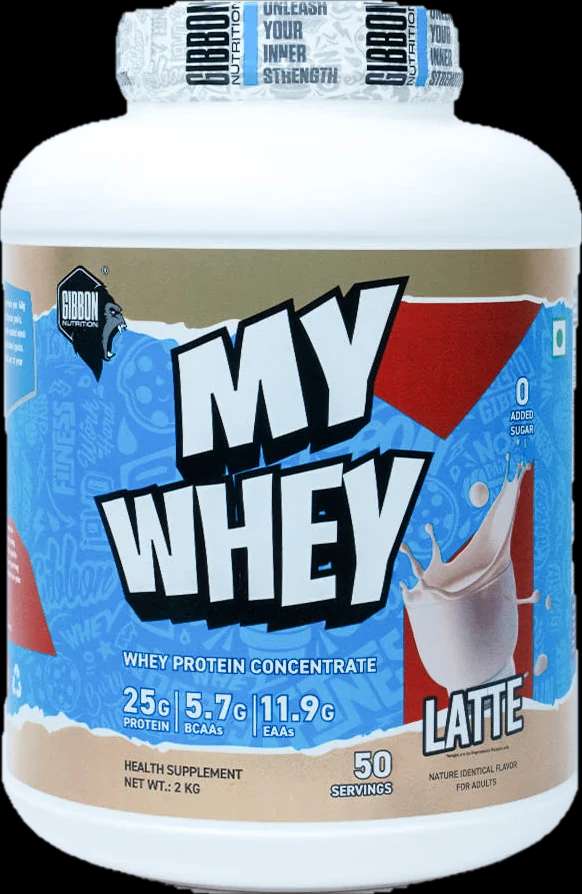
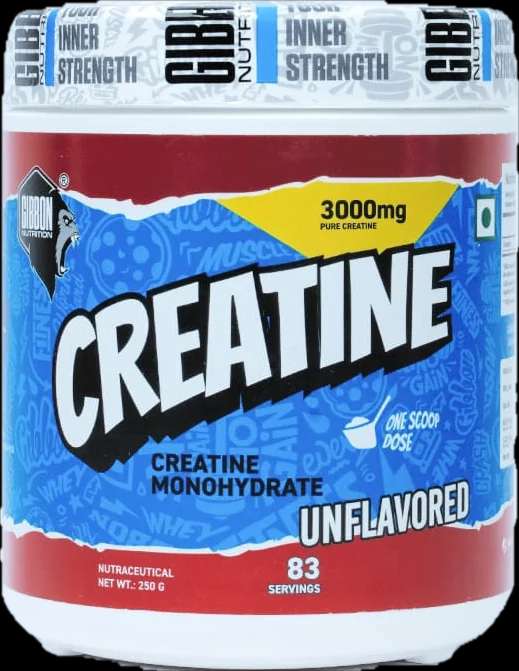
Current Gibbon product information lists Muscle Whey at 27 g protein per serving, My Whey at 25 g protein per serving, and its creatine product at 3 g creatine monohydrate per serving. Always use the current label on your own pack as the final instruction.
How to Decide What to Buy First
Before buying anything, answer these questions.
1. Am I Getting Enough Protein?
Estimate your actual food intake rather than guessing.
Use the Protein Calculator and compare the target with what you normally eat.
If you are consistently short, whey can solve a real problem.
2. Am I Training Consistently?
Creatine cannot rescue an inconsistent training programme.
Build a repeatable resistance-training routine first.
3. What Is My Actual Goal?
For muscle gain, calories, protein and progressive resistance training are foundational.
For strength and repeated high-intensity performance, creatine becomes particularly relevant.
4. Can I Afford and Maintain It?
A supplement only has practical value if you can use it consistently.
Buying several products for one month and then abandoning your routine is less useful than maintaining the fundamentals for a year.
The Bottom Line: Whey Protein or Creatine?
Whey protein and creatine should not be treated as competing versions of the same supplement.
Whey protein helps you meet an essential nutritional requirement.
Creatine helps support an energy system involved in repeated high-intensity exercise.
If you consistently fall short of your protein needs, prioritise protein first.
If your diet already provides enough protein and you train regularly, creatine can provide an additional evidence-backed performance benefit.
And if both solve a genuine need in your routine, there is no reason you must choose only one.
The hierarchy should remain:
Training → food → sufficient protein → recovery → targeted supplementation.
You can compare Gibbon Nutrition's complete Whey Protein range and Creatine range according to the gap you actually need to fill.
Questions
Is it better to take creatine or protein?
Neither is universally better. Protein is an essential nutrient, while creatine is an optional performance supplement. If your diet does not provide enough protein, fix that first through food and/or whey. If protein intake is already adequate and you perform regular resistance or high-intensity training, creatine may provide additional performance and strength benefits.
Do Virat Kohli take whey protein?
There is not enough reliable current evidence to state that Virat Kohli specifically takes whey protein. Older reporting from 2018 said his diet included “protein shakes” while also reporting that he had stopped consuming dairy products, which means those reports do not establish that the shakes were whey. More recent coverage discusses his disciplined diet and protein intake but does not reliably confirm current whey-protein use. Therefore, claims that Virat Kohli currently takes whey protein should not be presented as fact without a direct, current statement from him or his nutrition team.
How much creatine for 70 kg?
Creatine intake does not need to be calculated simply from body weight for routine supplementation. For adults in India, FSSAI documentation specifies a maximum of 3 g of creatine per day, and identifies creatine monohydrate as the commonly permitted form. Therefore, a 70 kg adult should not automatically multiply body weight by a generic internet formula and exceed the applicable product or regulatory guidance. Follow the serving directions on the product label.
Can you build muscle with whey protein?
Whey protein can help support muscle growth by providing high-quality dietary protein, but it does not build muscle on its own. Muscle gain requires progressive resistance training, adequate total protein, sufficient energy intake, recovery and sleep, and consistency. Protein supplementation can enhance resistance-training-induced gains when it helps achieve an appropriate protein intake.
Can I take whey protein and creatine at the same time?
Yes. Healthy adults can generally take whey protein and creatine together. They do not need to be separated by several hours.
Is creatine a protein?
No. Creatine is a nitrogen-containing compound involved in energy metabolism. It does not count toward your dietary protein requirement.
Does creatine contain calories?
Pure creatine monohydrate does not provide a meaningful source of dietary calories in the way protein, carbohydrates and fat do.
Do I need whey if I already eat enough protein?
Not necessarily. Whey is primarily a convenient protein source. If you consistently meet your protein requirements through food, whey is optional.
Do I need creatine if I take whey?
No. Taking whey does not create a requirement for creatine. Likewise, creatine does not replace whey or dietary protein.
Should I take creatine before or after my workout?
For long-term use, consistency matters more than exact pre- versus post-workout timing. Take it at a time that makes daily adherence easy.
Keep reading
 Health And Wellness
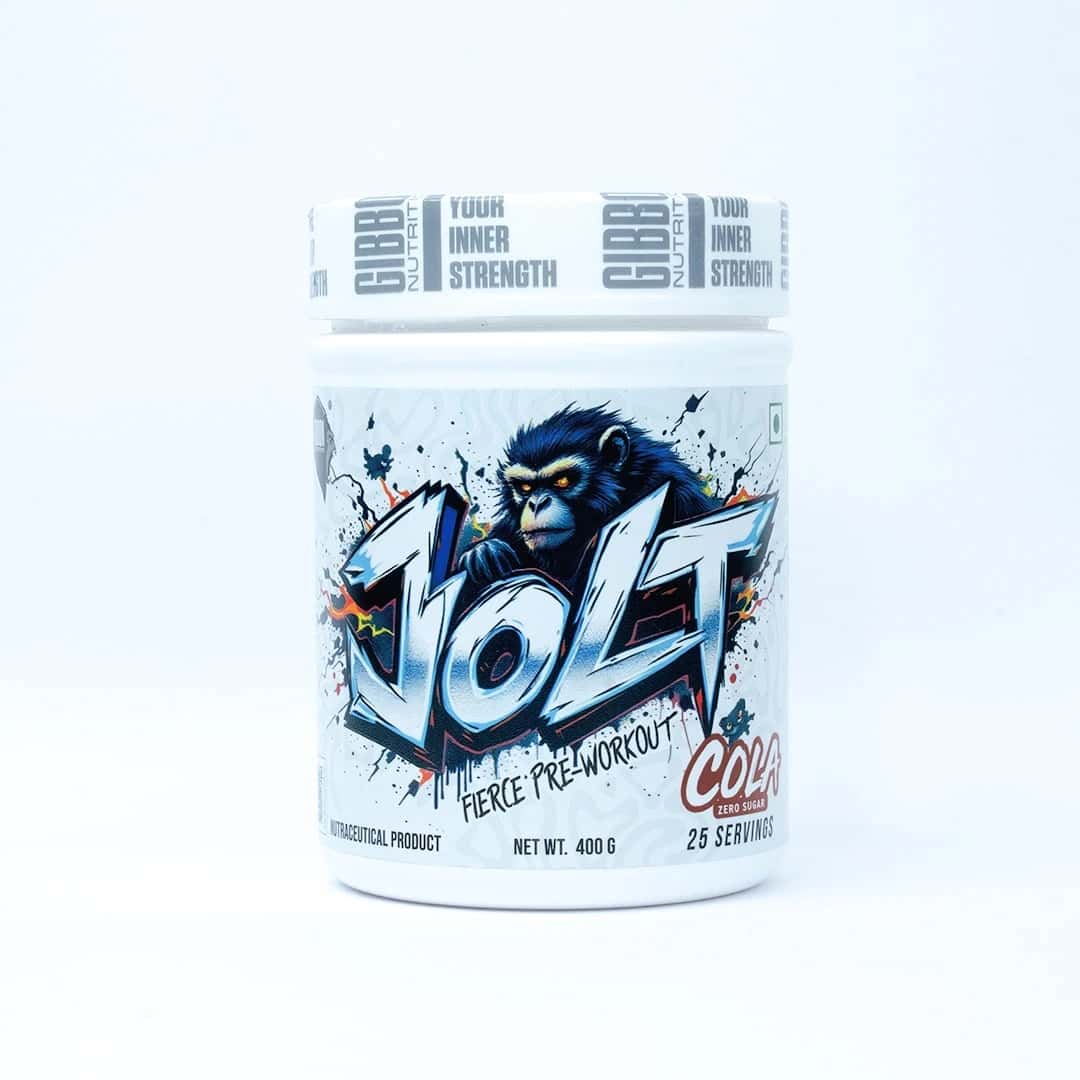
Best pre-workout in India: 3 compared on caffeine and ingredients
How to read a pre-workout label: caffeine per serving, citrulline, beta alanine, theanine, scoop size and warnings. Three in-stock pre-workouts from Gibbon, MuscleBlaze and Optimum Nutrition compared on each brand's own page, prices checked 31 Oct 2026.
6 min read · 31 Oct 2026
 Health And Wellness
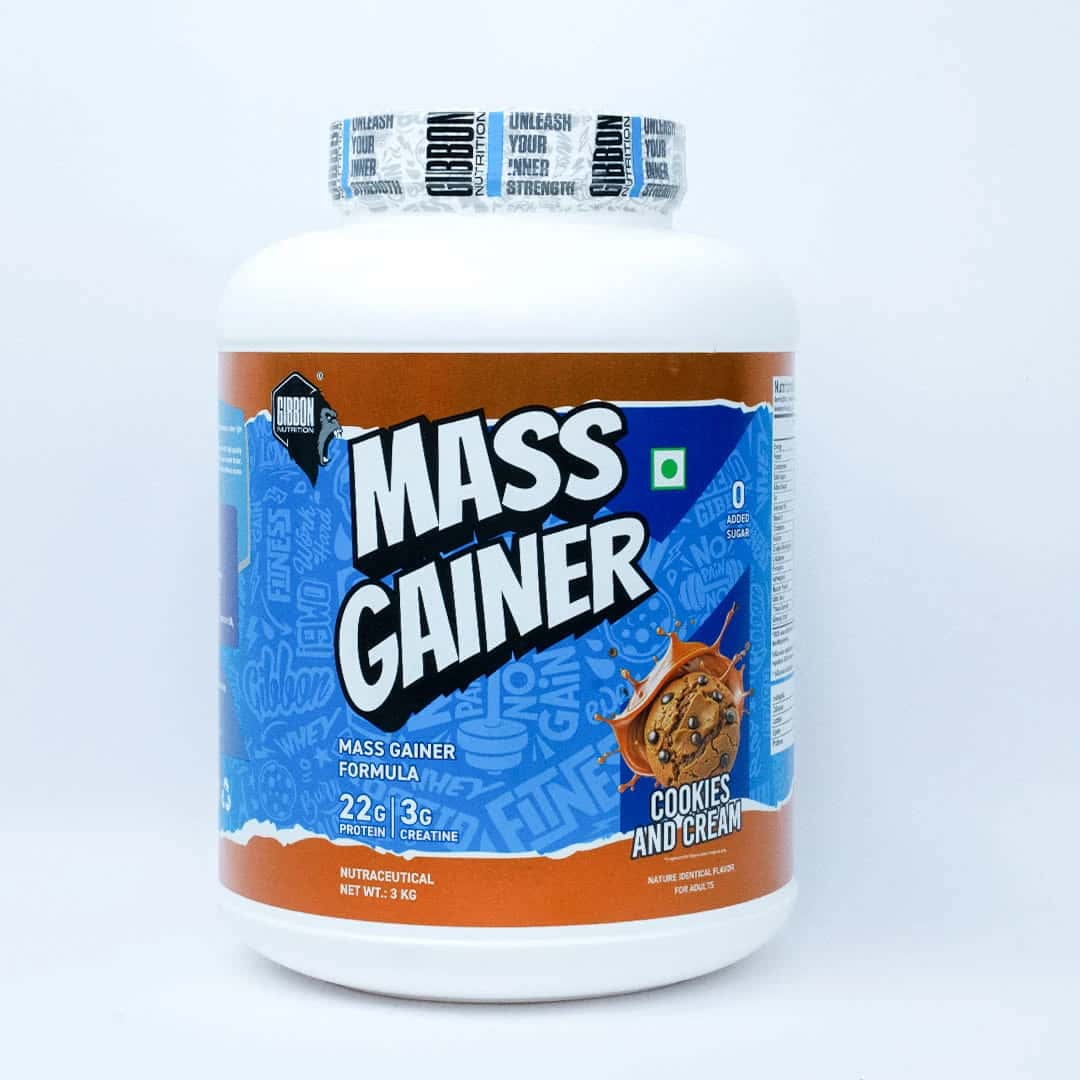
Best mass gainer in India: how to choose by calories, protein and budget
How to choose a mass gainer in India: serving size, calories, protein, carbs and sugar per serving, price per 1,000 kcal and pack size. Four gainers from Gibbon, Avvatar and MuscleBlaze compared on each brand's own page, prices checked 31 Oct 2026.
6 min read · 31 Oct 2026
 Health And Wellness
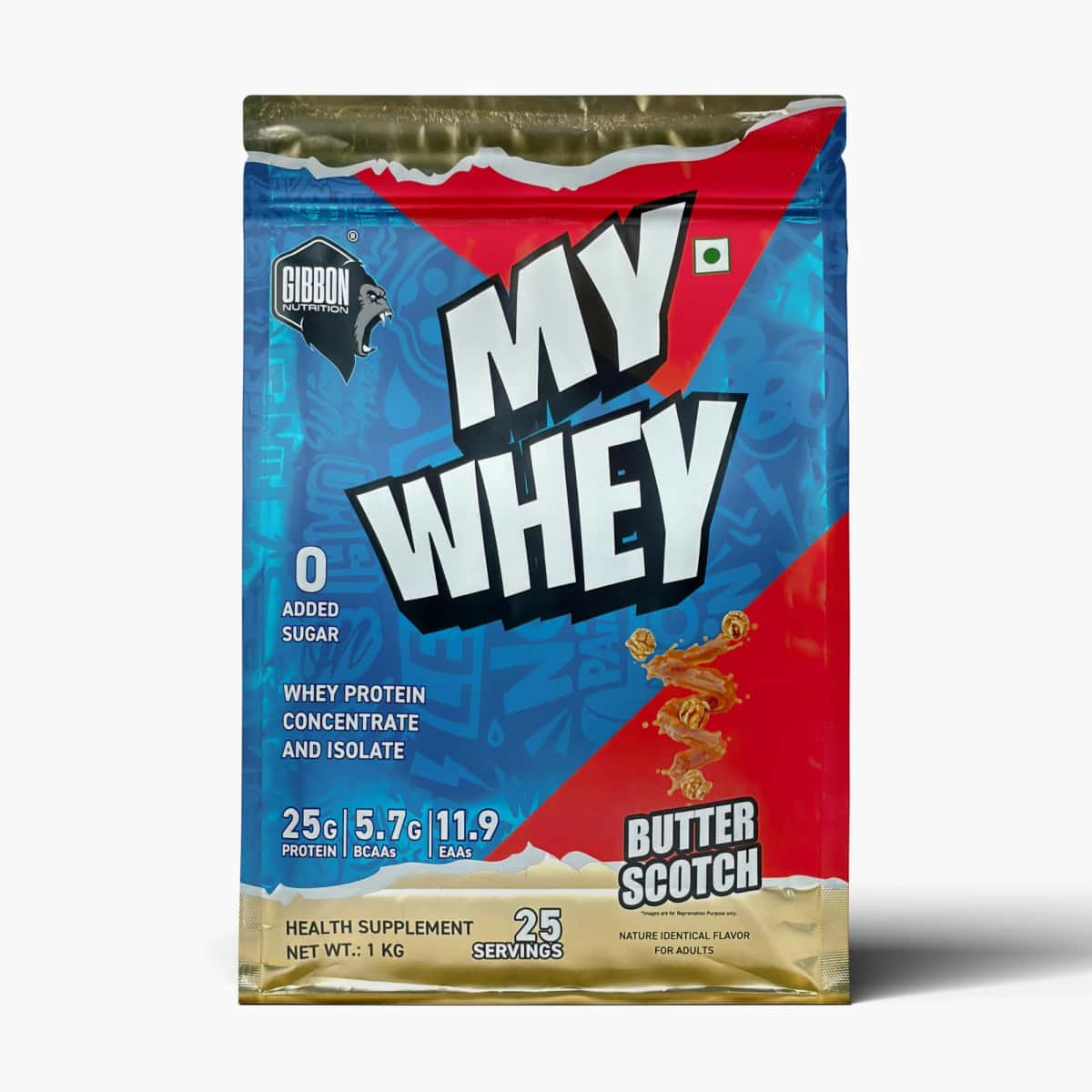
Whey protein under ₹5,000 per kg in India: price per serving, checked 31 Oct 2026
Pack price alone misleads. We compared six 1 kg whey proteins under ₹5,000 on price per serving and price per 25 g of protein, using selling prices on each brand's own site checked 31 Oct 2026. Costs run from about ₹99 to ₹163 per 25 g of protein.
6 min read · 31 Oct 2026
New guides by email
One email when we publish.