
When Should You Take Pre-Workout?
One of the most frequently asked and critical questions in the fitness community that "when should you take a pre-workout?" is especially crucial for beginners to understand. For most caffeine-containing pre-workout supplements, taking them about 30–60 minutes before training is a practical starting point. However, there is no single timing rule that applies to every formula.
The right timing depends on:
- the ingredients in your pre-workout;
- how quickly you personally respond to caffeine;
- whether you have eaten recently;
- what time you train; and
- the instructions provided on the product label.
Research summarized by the U.S. National Institutes of Health (NIH) notes that caffeine used for exercise is commonly consumed 15–60 minutes before activity. Caffeine typically reaches peak blood concentrations within roughly 45 minutes, although responses vary considerably between individuals.
So rather than automatically taking a scoop exactly 30 minutes before every workout, understand what is actually inside your pre-workout.
However, if you don't know much about pre-workout, what is pre-workout guide of ours will help you with it.
What Is the Best Time to Take Pre-Workout?
A useful general guide is:
| Type of Pre-Workout | Practical Timing |
|---|---|
| Caffeine-based pre-workout | Around 30–60 minutes before training |
| Citrulline-containing formula | Often used around 40–60 minutes before exercise in studies |
| Beta-alanine-containing formula | Daily consistency matters more than precise pre-workout timing |
| Creatine-containing formula | Regular intake matters more than taking it immediately before training |
| Stimulant-free pre-workout | Follow the ingredient profile and product directions |
Important: these are not universal dosing instructions. Always follow the serving and usage directions of the specific supplement you are taking.
Looking for a Pre-Workout from Gibbon Nutrition?
If you are planning to use a pre-workout before training, Gibbon Nutrition currently offers two options in its pre-workout range:
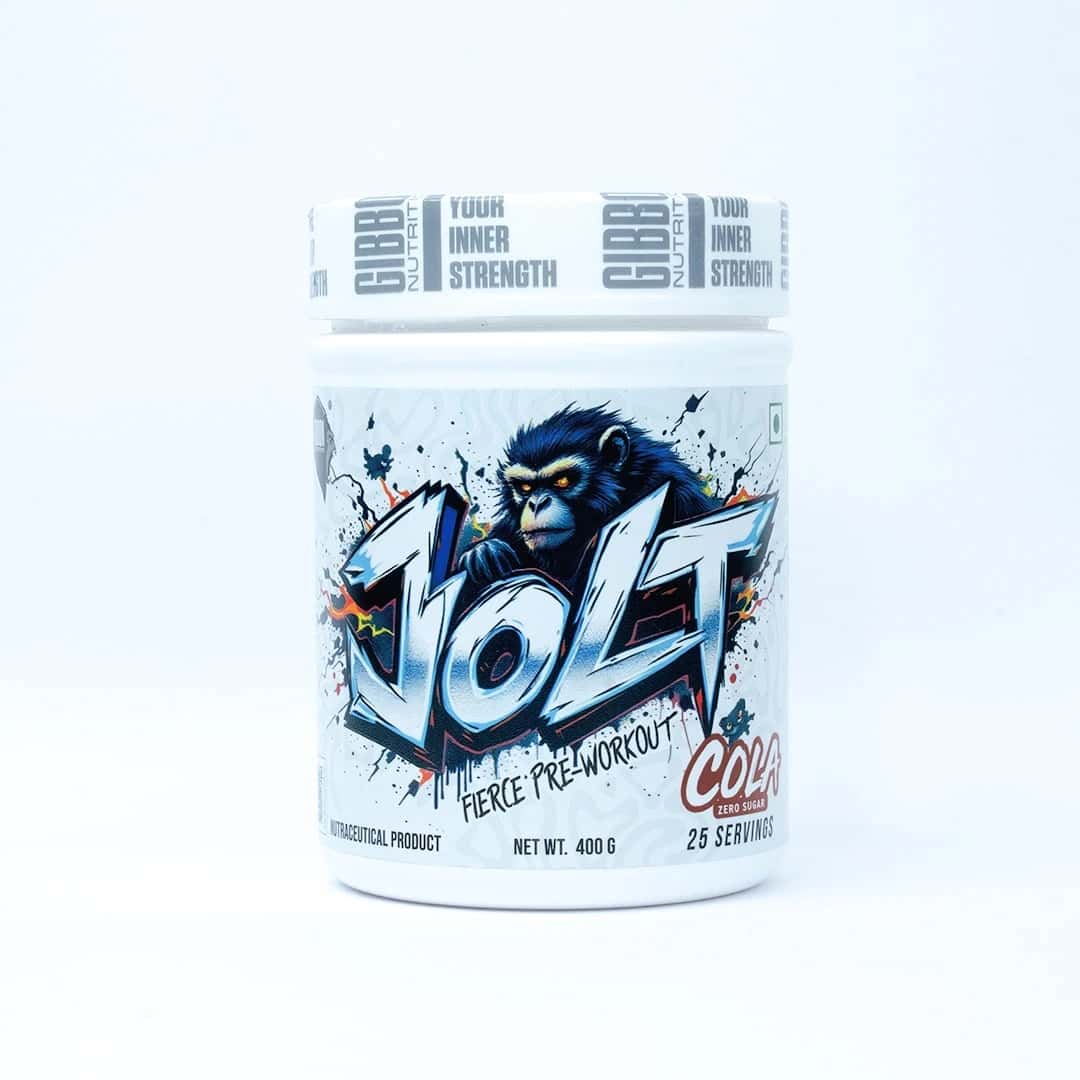
JOLT is a dedicated pre-workout product for users looking to add a pre-training supplement to their routine. It is currently listed as in stock and is part of Gibbon Nutrition’s pre-workout collection.
Svelte Pre 500gm is another pre-workout option available from Gibbon Nutrition, also currently listed as in stock.
For either product, follow the usage directions on the label and check the ingredient panel before deciding how far in advance to take it.
Explore:
Why Pre-Workout Timing Depends on the Ingredients
A pre-workout supplement can contain several ingredients that work in very different ways.
That is why judging the entire product by one “30-minute rule” can be misleading.
Caffeine
Caffeine is one of the most researched ingredients commonly found in stimulant pre-workouts. It works largely by blocking adenosine receptors in the nervous system, which can reduce feelings of fatigue and perceived effort.
According to the NIH, caffeine reaches peak concentrations in the blood within roughly 45 minutes and has an average half-life of around 4–5 hours.
This explains why many people take caffeine-containing pre-workouts roughly 30–60 minutes before training.
But faster is not necessarily better.
Caffeine response varies according to factors such as:
- habitual caffeine intake;
- individual metabolism;
- body size;
- genetics;
- food intake; and
- caffeine sensitivity.
If you regularly feel the effect midway through your workout rather than near the beginning, timing may be one factor worth adjusting.
Citrulline and Citrulline Malate
Citrulline is frequently included in pre-workout formulas.
Many resistance-training studies have administered citrulline malate approximately 40–60 minutes before exercise.
A 2021 systematic review and meta-analysis found a small improvement in repetitions performed when 6–8 g of citrulline malate was taken 40–60 minutes before resistance exercise.
However, the evidence should not be overstated.
A newer 2026 systematic review found that potential performance improvements from citrulline malate appear small and context-dependent, with overall certainty ranging from low to very low.
So, citrulline is a good example of why supplement marketing claims should not be treated as guarantees.
Beta-Alanine
Beta-alanine is different.
Its potential benefit does not depend primarily on taking a single serving 30 minutes before exercise.
Research from the International Society of Sports Nutrition indicates that beta-alanine works through consistent supplementation over weeks, increasing muscle carnosine levels over time.
Therefore:
If your pre-workout contains beta-alanine, the fact that you feel a tingling sensation soon after taking it does not mean the ingredient has suddenly started producing its longer-term training effect.
That tingling sensation, known as paraesthesia, is a commonly reported response to beta-alanine.
Creatine
Creatine is another ingredient for which consistency matters more than precise pre-workout timing.
Creatine supplementation works primarily by gradually increasing muscle creatine stores rather than producing an immediate stimulant-like effect.
Research reviewed by the International Society of Sports Nutrition describes ongoing daily intake protocols for maintaining elevated muscle creatine stores.
So if your pre-workout contains creatine, you should not assume it must be consumed immediately before training to work.
When Should You Take Pre-Workout for Different Workouts?
The ingredient formula matters more than the workout name, but your training schedule can help determine practical timing.
Before Weight Training
For a caffeine-based formula, around 30–60 minutes before lifting is a reasonable starting window.
If your warm-up takes 15–20 minutes, you may prefer the effects to become noticeable as you move into your heavier working sets rather than before you enter the gym.
Before Cardio or Endurance Training
Caffeine has stronger evidence for endurance and intermittent exercise than for very short-duration maximal efforts.
The NIH notes that caffeine may help with endurance activities and exercise involving repeated periods of intense effort, although individual responses vary.
For stimulant formulas, the same general 30–60 minute window is practical.
Before HIIT
For high-intensity interval training, avoid assuming that more stimulant means a better session.
Take the product according to its instructions and allow enough time to evaluate:
- energy;
- focus;
- stomach comfort; and
- your response to stimulants.
Do not double the serving simply because the first few minutes of your session do not feel different.
Before an Early-Morning Workout
Morning training often makes timing easier because sleep disruption is less of a concern.
You could:
- wake up;
- drink water;
- take your pre-workout according to its label;
- prepare for training; and
- begin your workout once your normal timing window has passed.
If taking pre-workout on an empty stomach causes discomfort, adjust your food timing rather than assuming fasted use is necessary.
Before an Evening Workout
Evening timing requires more care if the product contains caffeine.
Caffeine remains in the body for several hours.
One controlled study found that 400 mg of caffeine consumed even six hours before bedtime disrupted sleep compared with placebo.
A broader 2023 systematic review also found that caffeine can reduce total sleep time and sleep quality, although the size of the effect depends heavily on dose and timing.
Therefore, if you train late:
- check how much caffeine your pre-workout contains;
- consider your total caffeine intake for the day;
- monitor whether your sleep changes; and
- consider a stimulant-free option if caffeine interferes with sleep.
Protecting sleep is more important than forcing a stimulant into every workout.
Should You Take Pre-Workout on an Empty Stomach?
You can take some pre-exercise supplements without a meal, but empty-stomach use is not automatically better.
Some people feel the effects more quickly when they have not recently eaten, while others experience:
- nausea;
- stomach discomfort;
- jitters; or
- an unpleasantly strong stimulant response.
A large meal immediately before taking a pre-workout may also slow digestion and change how quickly you notice its effects.
The practical approach is to maintain a consistent routine and observe how your body responds.
Should You Take Pre-Workout Before or After Eating?
There is no universal rule.
If you prefer eating before training, allow enough time for the meal to digest comfortably.
A small pre-training meal or snack may work better for some people than taking a concentrated stimulant supplement immediately after a heavy meal.
More importantly:
A pre-workout supplement should not replace appropriate nutrition, hydration or sleep.
Those foundations have a greater influence on training quality than supplement timing alone.
How Long Does Pre-Workout Take to Kick In?
For caffeine-containing products, many users plan around 30–60 minutes because caffeine is rapidly absorbed and typically reaches peak blood concentrations within roughly 45 minutes.
However, “kicking in” is subjective.
You may notice:
- increased alertness;
- reduced perception of fatigue;
- tingling from beta-alanine; or
- no obvious sensation at all.
Not feeling a strong buzz does not automatically mean a supplement is ineffective.
Likewise, feeling intense tingling does not prove that the product will improve performance.
How Long Does Pre-Workout Last?
This depends heavily on the formula.
For caffeine, the NIH reports a half-life of approximately 4–5 hours.
A half-life does not mean caffeine completely disappears after five hours. It means roughly half may remain after that period, with considerable individual variation.
That is why a pre-workout taken in the evening can still affect sleep hours later.
For a deeper explanation, read our guide on how long pre-workout lasts.
How Late Is Too Late to Take Pre-Workout?
There is no universal clock time such as “never take pre-workout after 5 PM.”
Your bedtime matters more than the number on the clock.
If you normally sleep at 10:30 PM, a caffeinated pre-workout at 8 PM is very different from the same supplement taken by someone who sleeps at 2 AM.
Consider:
- your normal bedtime;
- caffeine dose;
- caffeine from coffee, tea and energy drinks;
- your personal sensitivity; and
- whether you notice delayed or poorer sleep.
If evening pre-workout consistently makes sleep worse, change the timing or use a stimulant-free product.
Signs You May Be Taking Pre-Workout at the Wrong Time
You may be taking it too late before training if:
- the effects become noticeable halfway through your session;
- you are already finishing your main working sets when you feel most alert.
You may be taking it too early if:
- you feel most stimulated long before training starts;
- your energy noticeably falls during the later part of your workout.
You may be taking caffeinated pre-workout too late in the day if:
- falling asleep becomes harder;
- you wake more often;
- sleep feels less restorative.
Instead of changing several things at once, adjust your timing gradually and compare similar training sessions.
Common Pre-Workout Timing Mistakes
1. Taking It Immediately Before Your First Set
Taking pre-workout in the gym changing room and expecting instant effects ignores the time required for ingredients such as caffeine to be absorbed.
2. Taking More Because You Cannot Feel It Yet
Do not add another serving just because 10 minutes have passed.
Follow the product's recommended serving.
3. Ignoring Other Caffeine Sources
Your pre-workout is not your only possible caffeine source.
Also count:
- coffee;
- tea;
- energy drinks;
- caffeine tablets; and
- other supplements containing stimulants.
4. Taking Stimulant Pre-Workout Too Close to Bedtime
A late workout may feel productive, but repeatedly sacrificing sleep for stimulant-driven training can work against recovery.
5. Assuming Every Ingredient Needs the Same Timing
Caffeine, citrulline, beta-alanine and creatine do not operate on identical timelines.
Read the formula rather than treating every pre-workout as the same product.
6. Changing Your Routine Every Workout
If you take your supplement 15 minutes before training one day, 60 minutes before another and after a large meal the next time, it becomes difficult to understand what timing works for you.
Consistency makes your own response easier to judge.
You may also read: Is pre-workout bad for you
Simple Pre-Workout Timing Guide
| Situation | Practical Approach |
|---|---|
| Standard gym session | Start around 30–60 min before if caffeine-based |
| Heavy resistance training | Allow enough time for stimulant effects before working sets |
| Cardio/endurance | Around 30–60 min for caffeine-containing formulas |
| Morning workout | Follow normal timing; monitor empty-stomach tolerance |
| Evening workout | Check caffeine content and protect sleep |
| Stimulant-free formula | Follow label and ingredient-specific directions |
| After a large meal | Effects may feel slower; allow for digestion |
Who Should Be More Careful With Pre-Workout?
Take extra care with stimulant-containing products if you:
- are particularly sensitive to caffeine;
- already consume significant caffeine during the day;
- take medication;
- have a medical condition;
- are pregnant or breastfeeding; or
- regularly experience palpitations, anxiety, sleep problems or other adverse symptoms after stimulants.
In these situations, speak with an appropriate healthcare professional before using stimulant-based supplements.
Frequently Asked Questions
Can I take pre-workout 10 minutes before exercise?
You can follow the directions on your specific product, but 10 minutes may be too short for many caffeine-containing formulas. Caffeine used for exercise is commonly taken approximately 15–60 minutes beforehand.
Is 30 minutes before a workout enough?
For many caffeine-based pre-workouts, 30 minutes can be a reasonable starting point, particularly if the product label recommends a similar window.
Individual response still varies.
Can I take pre-workout one hour before training?
Yes, depending on the formula. Around 60 minutes before exercise falls within commonly studied caffeine timing and is also frequently used in supplement research.
Should I take pre-workout before or after food?
Either may be possible depending on the product and your tolerance. A heavy meal may affect how quickly you notice the effects, while taking stimulant products on an empty stomach may cause discomfort in some people.
Can I take pre-workout at night?
You can use a pre-workout at night if the formula and your circumstances are appropriate, but stimulant-containing products may interfere with sleep. If you train late, check the caffeine content or consider a stimulant-free option.
How long does pre-workout stay in your system?
It depends on the ingredients. Caffeine has an average half-life of approximately 4–5 hours, although metabolism varies substantially between individuals.
Do I need pre-workout on rest days?
Not necessarily. A pre-workout is generally designed around training, while ingredients such as creatine or beta-alanine may follow separate consistent supplementation strategies depending on the product and individual plan.
Final Takeaway
For most caffeine-containing pre-workout supplements, 30–60 minutes before training is a sensible starting point, but the best timing is ultimately determined by the formula, product directions and your individual response.
Remember: Caffeine timing matters. Beta-alanine and creatine depend more on consistent intake. Citrulline timing has been studied around the pre-exercise window, but evidence for its performance effects remains mixed.
Most importantly, do not sacrifice sleep, hydration, nutrition or sensible training just to perfect the timing of a supplement.
Use pre-workout as a supporting tool, not the foundation of your workout.